
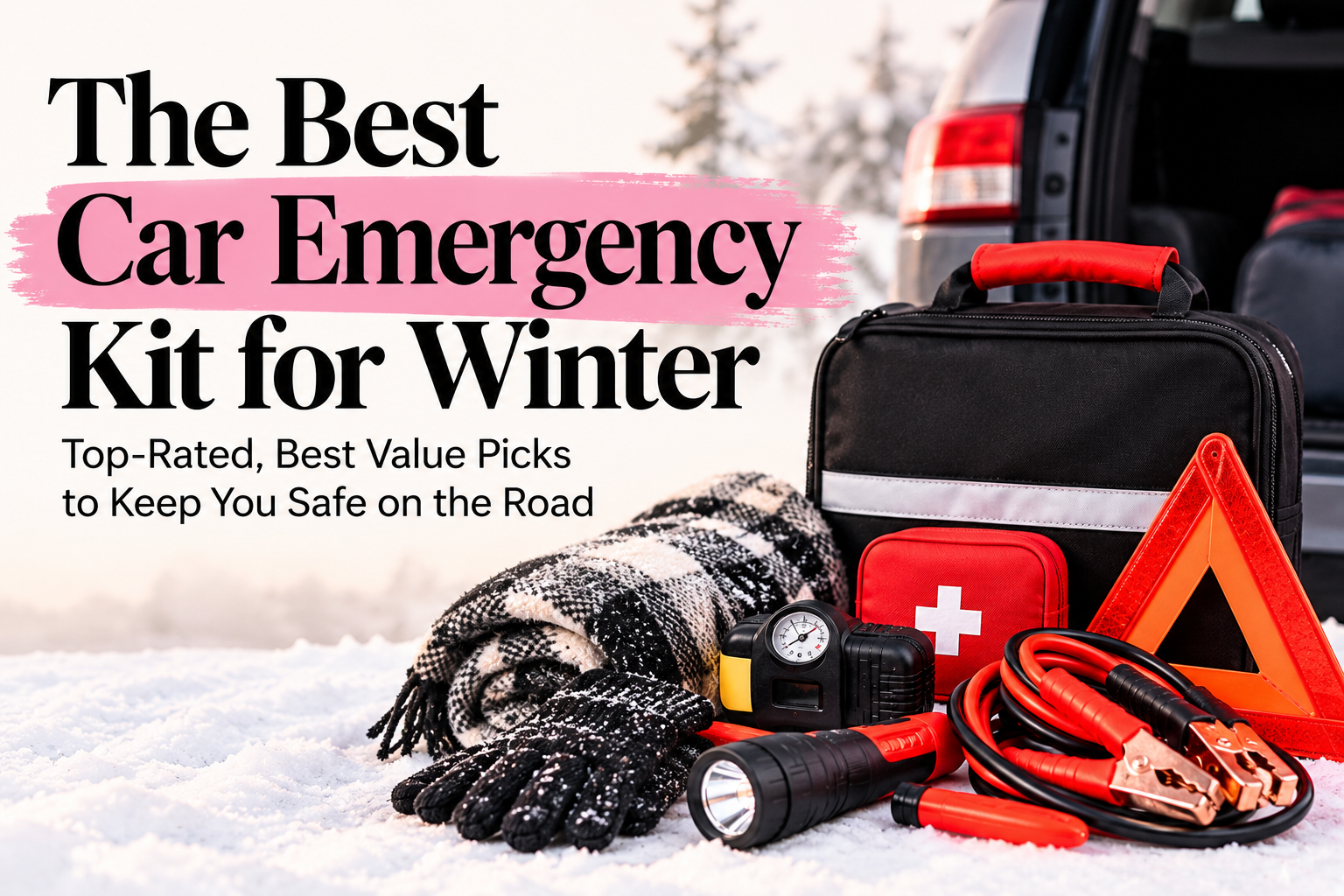
The best winter car emergency kit is not necessarily the one boasting 142 pieces, 17 zippers, and enough tiny plastic tools to open a very disappointing hardware store. For most drivers, the better buy is a dependable roadside kit with the essentials, plus a few targeted additions: a way to jump a dead battery, inflate a low tire, clear snow, stay warm, and be seen. You should not need a second mortgage or an engineering degree to assemble one.
If you want one ready-made recommendation, the Everlit Survival Car Emergency Kit is our best all-in-one value starting point based on its published contents, established review history, and 2026 retail comparisons. If you already own basic emergency supplies, skip buying another bag of duplicates. A compact jump starter or tire inflator can be a much smarter next dollar. And if you drive in real snow, actual warm clothing and a shovel matter more than a multitool that looks impressive on its packaging.
This guide compares 10 specific, researched products by usefulness, typical purchase cost, review evidence, and what problem each solves. None of the products was hands-on tested by Catching Print Co.; we weighed published specifications, independent automotive tests, recent marketplace snapshots, and safety guidance. Prices and ratings are reference points from 2026—not promises about today’s checkout total. The important part is knowing what to buy first, what to skip, and what to do when winter turns your commute into an unwanted survival episode.
Best Winter Car Emergency Kit: The Overall Value Winner
Here’s the buying decision in plain English: if your trunk currently contains a reusable grocery bag, one expired granola bar, and an ice scraper that may or may not belong to a former roommate, buy a foundation kit. A bundled kit saves the mental effort of sourcing every basic roadside tool. It also gives those tools one consistent home, which is surprisingly important when you’re looking for a reflective triangle in the dark.
The Everlit kit earns our best overall starter value designation because it brings together categories that otherwise require several separate purchases: jumper cables, a plug-in air compressor, warning equipment, a first-aid assortment, gloves and miscellaneous roadside tools. NBC Select’s September 2026 roundup named it a strong general-purpose choice. It is not a complete winter survival system, though. Don’t mistake a space blanket and a poncho for proper insulation or a snow shovel.
Before you spend, count what you already own. If you have a decent inflator and booster cables, paying again to replace them with a bundled version may be worse value. If you have none of those things, one solid bag can be the simplest way to make substantial progress this afternoon.

BEST ALL-IN-ONE VALUE
Everlit Survival Car Emergency Kit with Tire Inflator
A ready-made starting point with an inflator, jumper cables, basic first aid and warning gear. Most useful if you’re starting from zero; add true cold-weather clothing and a shovel.
Price reference: Around $60–$80 in recent 2026 comparisons.
Review reference: 4.7/5 in a July 2026 Amazon-market snapshot; prices and reviews change.
A small thank-you: this link supports our business.
A Prepacked Kit or DIY Emergency Bag: Which Costs Less?

For the best value, price the capabilities rather than the item count. You need to signal for help, stay warm, provide basic first aid, deal with a weak battery or tire, and keep your phone usable. Everything else is secondary. A frequent road-tripper who already owns tools can assemble a stronger custom kit by filling only the missing gaps.
Best-Value Portable Jump Starters: Budget vs. Brand-Name
A weak 12-volt starter battery is one of the classic winter-driving headaches. Conventional jumper cables still work when safely connected to a suitable donor vehicle, but a charged portable jump pack lets you attempt a start without depending on someone else being nearby. In Car and Driver’s 2026 hands-on testing, affordable and premium jump packs both had convincing options; the trade-offs included clamp quality, cable length, onboard energy and ease of use. Peak-amp marketing claims alone are a poor shopping strategy.
Start by checking your vehicle’s manual and battery system. Confirm the jump starter is compatible with your engine size, 12-volt electrical system and battery chemistry. Some hybrid and electric vehicles have special procedures or limitations. Never assume that the same tool or connection points work on every car. Read the manufacturer’s instructions before the day you need it—not while reading an error message under the hood.
For a typical compatible passenger car, the AstroAI S8 is our budget pick. It has a strong volume of user-review evidence and has appeared around the mid-$40 range in 2026 price tracking. That makes it attractive for drivers who want a meaningful emergency upgrade without moving straight to a $100 device. Its limitations are the usual ones for compact lithium packs: keeping it charged, knowing how to use boost mode, and respecting storage-temperature limits.

BEST BUDGET JUMP STARTER
AstroAI S8 1500A Portable Jump Starter
Compact 12V jump pack for compatible vehicles. A strong value option when you want to avoid needing a second vehicle for a standard battery jump.
Price reference: About $40–$60 in recent 2026 listings.
Review reference: 4.5/5 in indexed Amazon product data; prices and reviews change.
A small thank-you: this link supports our business.
What are you paying extra for with NOCO?
The NOCO GB40 costs notably more in recent comparisons, yet it remains a reasonable choice for someone who prioritizes an established brand, a compact case and familiar safety features. Car and Driver’s May 2026 comparison named it the most compact of the models it tested, while also noting very short cable leads and limited retained energy after a demanding jump test. That’s useful context: more expensive does not mean every specification improves.

BEST RECOGNIZABLE UPGRADE
NOCO Boost Plus GB40 1000A Jump Starter
A widely reviewed premium compact option with reverse-polarity protections; a good fit for buyers who value established brand support over lowest possible price.
Price reference: Approximately $100 in October 2026 reports.
Review reference: 4.3/5 in an October 2026 Amazon listing check; prices and reviews change.
A small thank-you: this link supports our business.
Best Tire Inflator for a Winter Car Kit: Spend Less, Not Recklessly
Cold weather can reveal a low tire pressure warning at the precise moment you’re already late. A portable inflator is genuinely practical, but it isn’t a substitute for repairing a puncture or inspecting a damaged tire. Check the tire placard on your driver’s doorjamb for the vehicle manufacturer’s recommended cold-tire pressure. The number molded into the tire sidewall is generally its maximum allowable pressure, not your everyday target.
For many drivers, a 12-volt plug-in compressor is a better value than a cordless model. It uses the vehicle’s compatible power outlet, doesn’t rely on a separate battery being charged, and often costs less. The trade-off is simple: the cable needs to reach every tire and the socket must work. Some cars disable those outlets when the ignition is off; follow your vehicle and compressor instructions to prevent draining a weak battery.
The AstroAI digital inflator is our low-cost choice for someone who doesn’t already have one. Its published design offers programmable pressure shutoff and an LED light, and indexed review counts are substantial. If you buy the Everlit kit above, however, you probably do not need this second inflator. That’s an intentional money-saving recommendation, even if it means clicking one fewer link.

BEST LOW-COST TIRE INFLATOR
AstroAI 12V Digital Tire Inflator (Yellow)
A plug-in compressor with preset-pressure shutoff. Particularly good value if you already own the basics and don’t need a second full emergency kit.
Price reference: Typically in the low-$30 range.
Review reference: 4.5/5 in indexed Amazon product data; prices and reviews change.
A small thank-you: this link supports our business.
Know when an inflator cannot help
If a tire is visibly shredded, has sidewall damage, or is rapidly losing air, adding pressure does not make it safe to drive. Move somewhere safe if possible, call roadside assistance, and follow professional advice. Tire sealant can be a temporary option for some small tread punctures but may be ineffective in extreme cold or incompatible with certain repairs and sensors. Consumer Reports emphasizes that a sealant is not a universal solution.
Do You Still Need Jumper Cables If You Own a Jump Pack?
Energizer’s 16-foot, 4-gauge set is a conventional, relatively affordable option with a practical length for many cars and SUVs. Remember that booster-cable gauge and material influence performance; don’t compare solely by the number printed on the packet. Use only appropriate, approved jump-start points, and keep clear of moving engine parts. If you are uncomfortable making the connections, calling help is the sensible decision—not a test of character.

BEST NO-BATTERY BACKUP
Energizer 16-Foot 4-Gauge Jumper Cables
Traditional long booster cables with a carrying bag. Simple, relatively inexpensive insurance when another vehicle can reach you.
Price reference: A recent retailer comparison showed about $26.
Review reference: Check current Amazon rating before purchase; prices and reviews change.
A small thank-you: this link supports our business.
Best Snow Brush, Ice Scraper and Shovel for the Car

Choose a scraper that you can comfortably hold in gloves and a brush long enough to reach the roof and windows of your vehicle. Be especially careful with rear cameras, sensors, delicate trim and wiper assemblies. Clear all windows, lights, mirrors, plates and accumulated roof snow before driving. A tiny clear patch on the windshield might look like a solution, but it gives you the visibility of a submarine periscope and can put other drivers at risk.
The AstroAI 27-inch brush-and-scraper is a strong value example, with roughly 4.6-star indexed review evidence from tens of thousands of customers. Its detachable design helps with storage and lets you use the scraper separately. For an especially tall SUV, check the reach rather than assuming 27 inches is sufficient; an extra-long brush may be worth its cost in that particular situation.

BEST SNOW-CLEARING VALUE
AstroAI 27-Inch Snow Brush and Detachable Ice Scraper
The detachable brush and scraper cover routine windshield and roof snow without paying for an elaborate gadget.
Price reference: About $14–$17 in recent comparisons.
Review reference: 4.6/5 across more than 30,000 indexed ratings; prices and reviews change.
A small thank-you: this link supports our business.
A small shovel solves a different problem
A brush removes snow from a vehicle; a shovel clears the ground around it. That’s especially relevant if a tire is buried in snow or if you need to clear an exhaust outlet before using the heater. A compact folding shovel earns points for fitting easily in a small trunk, but it does not magically become a full-size snow shovel. Digging a substantial drift with a tiny blade is a workout nobody ordered.
Rhino USA’s folding shovel is a good compact tool for occasional digging and packed snow. We favor its sturdier steel construction and strong review record over fragile novelty designs. The trade-off is size and weight. Drivers in areas with frequent large snowfalls may prefer a full-sized snow shovel stored securely when space allows. Do not attempt a risky roadside recovery or stand in traffic just because you brought equipment.

BEST COMPACT RECOVERY TOOL
Rhino USA Folding Survival Shovel with Pick
A compact steel folding shovel for clearing packed snow and light digging; less leverage than a full-size snow shovel but much easier to store.
Price reference: About $27–$30 in 2026 market snapshots.
Review reference: 4.7/5 in indexed buyer ratings; prices and reviews change.
A small thank-you: this link supports our business.
What Actually Keeps You Warm If You’re Stuck in Your Car?

First, real winter clothing. A dry insulated coat, hat, thick socks, waterproof footwear, gloves and a warm blanket are more useful than a drawer full of tiny survival accessories. Pack for the coldest conditions on your route, not the temperature when you leave home. You can be perfectly comfortable at departure and find yourself waiting on a windswept highway hours later.
Air-activated hand warmers are inexpensive, compact extras for pockets and gloves. HotHands’ 10-pair pack has had an attractive per-pair cost and strong indexed marketplace ratings. These warmers are not a replacement for insulation, and they should be used according to the package warnings; avoid direct skin exposure when directed and take extra care with children, reduced sensation and sleeping passengers.

BEST INEXPENSIVE COMFORT EXTRA
HotHands Hand Warmers, 10-Pair Value Pack
Air-activated hand warmers are small, easy to stash and a sensible addition to actual gloves and warm layers.
Price reference: Approximately $7–$8 in August 2026 tracking.
Review reference: 4.8/5 in August 2026 marketplace tracking; prices and reviews change.
A small thank-you: this link supports our business.
Are emergency foil blankets actually worth carrying?
Yes, as a backup layer—but marketing sometimes makes them sound like a portable central-heating system. A reflective Mylar blanket can reduce radiant heat loss and serve as a compact weather barrier in some situations. It does not generate heat, and it won’t perform like a thick insulated blanket if you are sitting in prolonged freezing conditions. If you only buy one warmth item, a real blanket and proper clothing should come first.

BEST BACKUP WARMTH LAYER
Swiss Safe Emergency Mylar Thermal Blankets, 4-Pack
Lightweight reflective emergency sheets that help reduce heat loss when used correctly, but do not replace insulated winter blankets.
Price reference: A marketplace tracker has listed this pack around $18.
Review reference: Current Amazon rating not independently confirmed; prices and reviews change.
A small thank-you: this link supports our business.
The Most Underrated Roadside Tool: Hands-Free Light
Phone flashlights are convenient until the phone is also your map, your connection to roadside assistance and your dwindling battery percentage. A separate headlamp allows you to see the tire valve, inspect the ground, or locate equipment while keeping both hands free. This isn’t an invitation to repair a car on a dangerous shoulder. It simply makes safe, stationary tasks much easier.
The GearLight S500 battery-operated two-pack appeals on value because you can keep one in the vehicle and another near your home emergency supplies. Its indexed customer review record is large, although you should check the exact variant and included-battery details. Include fresh spare batteries in a cool, dry location, or choose rechargeable lighting only if you’re committed to keeping it charged. Know where the power switch is before you need it.

BEST HANDS-FREE LIGHT
GearLight S500 LED Headlamps, 2-Pack
Two simple battery-operated headlamps let you keep both hands available when inspecting a wheel or arranging supplies in the dark.
Price reference: Check current Amazon price and battery requirements.
Review reference: 4.6/5 in indexed Amazon product data; prices and reviews change.
A small thank-you: this link supports our business.
How to Build a Winter Car Emergency Kit Without Overspending
- Roadside recovery: suitable jumper cables or a maintained jump pack, tire inflator, pressure gauge, correctly equipped spare or vehicle repair solution, and a small shovel where snow is common.
- Visibility: flashlight or headlamp, fresh batteries, reflective warning devices, and a bright cloth to signal rescuers.
- Warmth: insulated blanket, dry hat, gloves, coat, boots, spare socks and optional hand warmers or foil sheets.
- Health and comfort: basic first aid, drinking water, high-calorie shelf-stable snacks, tissues, any essentials for passengers and pets, and a way to charge your phone.
- Vehicle-specific necessities: owner’s manual, winter washer fluid, suitable traction aid, and any equipment recommended for your driving region.
Don’t buy products you already have just to complete a list. You can build a useful starter pack with your existing blanket, flashlight, gloves and charger, then spend money on the highest-impact missing tool. The shopping links in this guide are options, not instructions to purchase ten different things. If you buy an Everlit bundle, for example, skip the separate inflator and cables until you’ve decided whether the included equipment meets your needs.
A realistic three-level budget
Basic upgrade: use a sturdy bag or tote you own, add a snow brush, warm clothing, food, water and visible signaling. This is the lowest-cost place to begin. Balanced setup: add a value jump starter or plug-in inflator, choosing whichever capability you’re missing. Long-distance setup: carry more substantial warmth supplies, a better shovel, additional water and food for each passenger, and equipment appropriate to remote conditions. You aren’t buying a lifestyle; you’re solving a foreseeable problem.
What to Do If You’re Stranded in a Winter Storm

The equipment is only half the story. These winter driving safety tips are just as important as the gear: the National Weather Service generally advises remaining inside a stranded vehicle in a severe winter storm unless a safe shelter is very close, because blowing snow can quickly disorient people on foot. Call emergency services when the situation is life-threatening, make your location known, and follow first-responder instructions. Use hazard lights or other signals if doing so is safe and effective.
If you need to run the engine for warmth, carbon monoxide is a serious danger. The National Weather Service recommends checking that the exhaust pipe is completely clear of snow and allowing some fresh air into the vehicle while using the heater. Its guidance often describes short heating periods of about ten minutes per hour, depending on conditions. Never idle in an enclosed space or when the exhaust could be blocked. If the exhaust cannot be kept clear, don’t run the engine.
Avoid strenuous digging or pushing in deep snow; cold exertion can become dangerous quickly. Stay dry, move your arms and legs periodically to maintain circulation, share warmth supplies, and conserve phone power. An emergency kit is not a guarantee of safety, and no shopping recommendation overrides instructions from local authorities or the judgment that it is safer to avoid the trip in the first place.
Where to Store Your Car Emergency Kit—and How Often to Check It
A tool you cannot reach is a tool you don’t really have. Secure the heavier recovery equipment in the cargo area so it cannot become a projectile during hard braking. Keep a smaller pouch with a flashlight, charger, basic first-aid supplies, warm gloves and emergency contact information where you can reach it from the cabin. Avoid burying the whole kit beneath luggage, and don’t place items where they interfere with air bags or driving controls.
Check supplies twice a year: once before winter and once before summer. Inflate a tire at home with your compressor to confirm the cord and attachments work. Check jump-pack charge, inspect batteries for corrosion or leaks, replace old food and water, and confirm that clothing still fits the people riding in your vehicle. Lithium jump packs and stored water may have temperature limitations, so follow the manufacturers’ storage directions rather than leaving everything in a hot or freezing car indefinitely.
Winter Car Emergency Kit FAQs
What is the best winter car emergency kit for the money?
For shoppers who own almost no emergency gear, the Everlit roadside kit is our best-value foundation because it combines several genuinely useful vehicle tools. For drivers who already own cables, warning gear and a compressor, the better value is to buy only what is missing—often a compatible portable jump starter, warm clothing or an actual snow shovel. The best kit is a working collection of capabilities, not simply a branded bag.
What should be in a winter emergency kit for a car?
Prioritize warm layers, blankets, water, snacks, a flashlight, first aid, a phone charging option, a snow brush and shovel, jumper cables or a jump starter, tire tools and visible warning devices. Add passenger-specific supplies, traction aids, and local-weather necessities. AAA and the National Weather Service provide excellent free checklists; your car owner’s manual should guide vehicle-specific equipment.
Are cheap car emergency kits worth buying?
Sometimes. The useful ones offer real tools rather than inflated piece counts. Look for cable length and gauge, a functional light, a suitable compressor if advertised, practical first-aid basics and sensible storage. Compare the price to buying the missing pieces separately. Cheap can be smart; cheap equipment that fails when needed is not a bargain.
Can a jump starter stay in my car all winter?
Follow the exact manufacturer’s storage and operating temperature ranges. Cold can reduce a lithium pack’s available performance, while extreme heat and improper charging can also damage batteries. Keep the pack charged on a schedule and follow instructions about bringing it to a safe operating temperature before use. Never assume all models can be stored or charged identically.
Do emergency blankets replace a regular winter blanket?
No. Reflective foil sheets can be useful as compact backup protection, but meaningful insulation comes from dry clothing, blankets and suitable outerwear. If you carry both, the foil sheet becomes an additional tool rather than your only plan for staying warm. Carry enough suitable gear for everyone who normally rides with you.
How We Chose These Recommendations
We compared published specifications and review evidence rather than claiming we tested everything in person. Useful independent references include AAA’s car emergency checklist, the National Weather Service’s winter storm advice, Consumer Reports’ winter kit guide, Car and Driver’s 2026 jump-starter testing, and NBC Select’s September 2026 winter-kit recommendations. For pricing and star ratings, we used 2026 retail comparisons and indexed product records, which may lag live listings.
The short version: buy for the winter you’ll actually drive in, maintain what you purchase, and spend the extra money on a working battery solution and proper warmth supplies before buying novelty survival gadgets. A well-prepared trunk should make you feel more independent—not as though you’ve enrolled in an extreme-weather reality show.
Research updated October 29, 2026. This article contains product-selection guidance, not a guarantee of current Amazon inventory, pricing or purchaseability.








Leave a Reply