
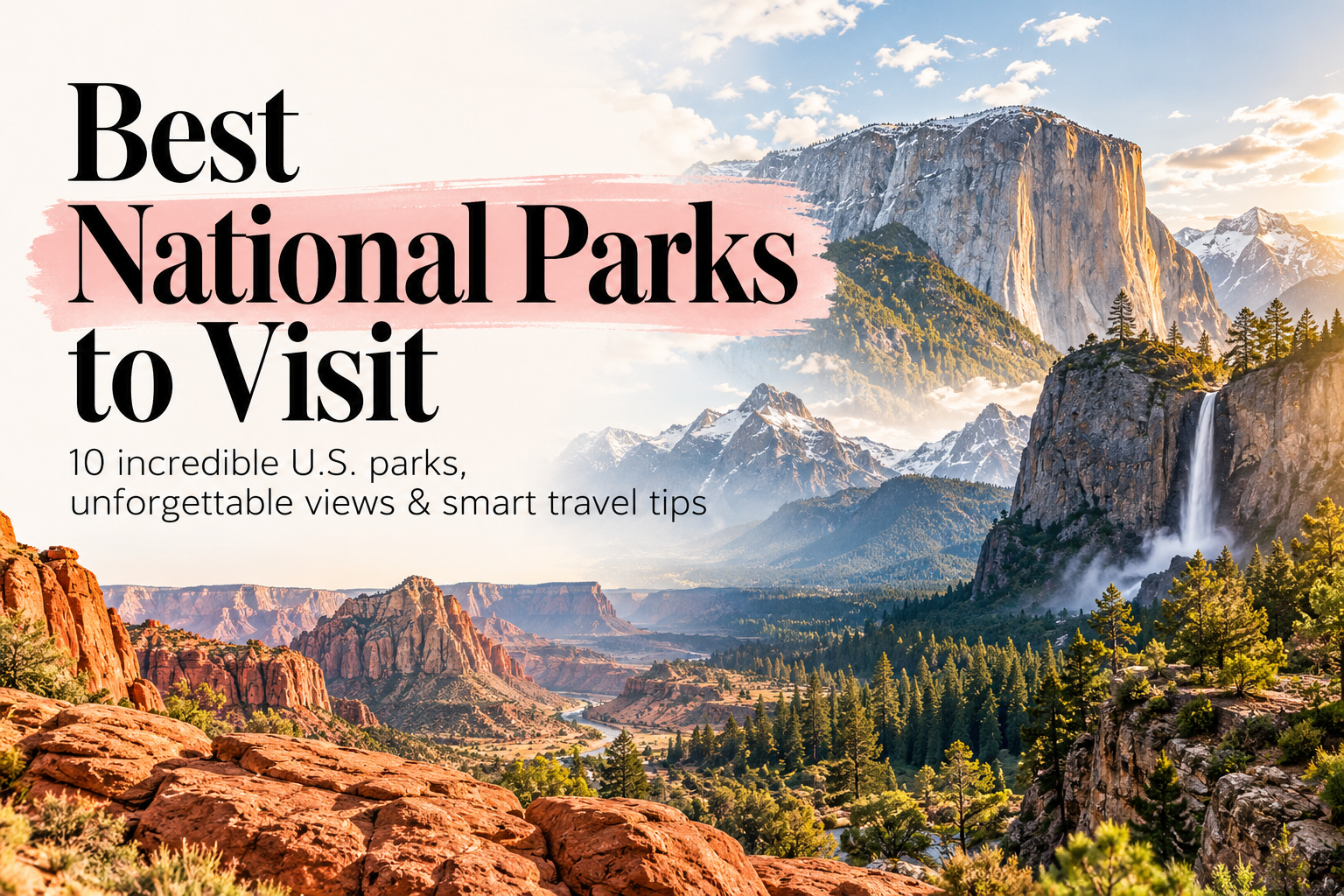
There are vacations, and then there are national park vacations: the kind where you stop mid-sentence because a mountain has appeared, your camera roll gains 400 nearly identical photos of a tree, and you suddenly care a lot about the color of a rock. If you love the American outdoors, you already know that feeling. If you haven’t experienced it yet, consider this your very enthusiastic invitation.
The best national parks to visit are not necessarily the biggest, the most famous, or the ones with a photo that has taken over your social feed. They’re the parks that fit your idea of an unforgettable trip. Maybe that’s a wild coastline, a road through mountain peaks, a sunrise over red rock, or a quiet forest that makes your phone feel wonderfully irrelevant.
This photo-filled guide takes you through ten spectacular U.S. national parks, what makes each one special, the experiences actually worth planning around, when to consider going, and the little practical details people wish they’d known before arriving. No wilderness superiority contest here: scenic-drive people, serious hikers, spontaneous wanderers, and the “I love nature but also a real bed” community are all welcome.
And because park obsession deserves to live beyond a camera roll, there’s one illustrated national parks book tucked into this guide for anyone who wants a lovely reminder of the places they’ve been—and the ones still haunting their travel wish list. Otherwise, our focus is on the parks themselves. The scenery has plenty of selling power on its own.
Waterfalls: Yosemite. Wildlife and geysers: Yellowstone. Epic overlooks: Grand Canyon. Red-rock hiking: Zion or Arches. Mountain lakes: Glacier or Grand Teton. Coastal charm: Acadia. Moody green forests: Olympic. Desert sunsets: Joshua Tree.
How to choose the best national park for your kind of adventure
Start with a slightly unromantic question: what do you want to do all day? The person dreaming about a five-hour alpine hike and the person picturing a lovely lookout, leisurely lunch, and sunset drive can both have the time of their lives—but perhaps not with the same itinerary. If you’re traveling together, talk about trail length, elevation, restroom access, driving tolerance, and whether anyone gets deeply unpleasant when hungry. These details are more important than a park’s Instagram reputation.
Next, choose a landscape. The Southwest offers red cliffs, arches, and wide-open skies. The Rockies and northern ranges serve up jagged peaks, lakes, and wildlife. The Pacific Northwest is perfect for mossy forest lovers. The Northeast blends coast, mountains, villages, and autumn color. Then choose a season, because a gorgeous summer brochure cannot guarantee a high-elevation road is open in April.
Finally, plan around one signature experience per day, not seven. Add another stop if the energy is there. You’ll remember the unexpected rainbow over a canyon long after you’ve forgotten the fourth rushed overlook. There is no award for achieving maximum mileage in damp socks.
10 incredible U.S. national parks that deserve a spot on your list
1. Yosemite National Park, California: the dramatic one
Yosemite is what happens when granite cliffs, waterfalls, meadows, and giant sequoias all decide to show off in the same place. Stand in Yosemite Valley and the scale feels almost suspicious: El Capitan rises straight out of the landscape, Half Dome commands the skyline, and waterfalls arrive with their own soundtrack. Tunnel View is famous because it genuinely deserves to be; even a short stop can become the most memorable moment of your trip.
Don’t miss: an unhurried valley walk, Tunnel View, and a waterfall viewpoint when flows are strong. Best seasonal bet: spring for rushing waterfalls, especially around May; late summer is beautiful but some falls can be greatly reduced. High-country roads may stay closed until late spring or early summer. Check the NPS Yosemite guide before choosing dates. A 2026 park-entry reservation is not required, but traffic and lodging still demand planning.
2. Yellowstone National Park, Wyoming, Montana and Idaho: the delightfully strange one

Yellowstone isn’t just a national park; it’s an entire planet of steaming ground, colorful hot springs, geysers, grasslands, and animals that very much have right of way. Old Faithful is a classic for good reason, but the quiet boardwalk moments—when the earth seems to hiss and bubble around you—can be just as memorable. Grand Prismatic Spring and the Grand Canyon of the Yellowstone add striking color to an already outrageous lineup.
Don’t miss: the major geyser basins, a waterfall viewpoint, and wildlife watching from a safe distance. The roads and distances can surprise first-timers, so don’t try to loop the entire park between breakfast and dinner. Keep at least 25 yards from bison and elk and 100 yards from bears, wolves, and cougars; stay on boardwalks in thermal areas. The bison is not interested in starring in your selfie. See official Yellowstone wildlife safety.
3. Grand Canyon National Park, Arizona: the perspective-reset one

You can see a thousand photos of the Grand Canyon and still be unprepared for what it’s like to stand at the rim. The layers run into the distance so far that your brain briefly gives up estimating them. Sunrise and sunset paint different sections of the canyon with shifting color; meanwhile, a simple rim stroll can be every bit as satisfying as a demanding descent.
Don’t miss: South Rim viewpoints, the Rim Trail, and time to sit without rushing to the next photo. Best for: first-time national park visitors and travelers who want dramatic scenery without a major hike. The South Rim is open year-round, though winter weather can change road conditions. Never treat hiking down as the easy half: climbing back up is the part that makes the rules. For changing North Rim access and road repairs, check current NPS status rather than relying on an old itinerary.
4. Zion National Park, Utah: the red-rock movie set

Zion knows how to make an entrance. The canyon walls seem to climb straight into the sky, a river winds through the valley, and the colors change throughout the day. You don’t have to tackle a strenuous hike to appreciate the place. Riverside Walk and canyon viewpoints offer beautiful experiences with a gentler pace; more ambitious trails are available for people who actually enjoy having their calves discuss their life choices.
Don’t miss: a canyon-floor walk, stops along the scenic shuttle route when operating, and the changing evening light. Important: hiking Angels Landing requires a permit; shuttle operating periods and trail conditions change. If dramatic heights make you nervous, you’re not missing the soul of Zion by skipping it. Check Zion’s official trail and permit guidance.
5. Glacier National Park, Montana: the alpine daydream

Glacier is a place for people who have ever looked at a mountain and thought, “I would like to live near that forever.” Clear lakes, steep peaks, and dramatic valleys make even the drive feel like a special event. Going-to-the-Sun Road is the famous centerpiece, but its high-elevation sections depend on snow conditions; visiting before the road fully opens requires flexibility.
Don’t miss: lakeside viewpoints and whatever sections of Going-to-the-Sun Road are safely open during your visit. Best seasonal bet: generally summer for high-country access, with shoulder-season visits offering a different, quieter mood. For 2026, Glacier does not require park-wide vehicle reservations, but Logan Pass has specific parking and shuttle arrangements. Read the current access rules before planning a long drive around a particular stop.
6. Grand Teton National Park, Wyoming: the effortless show-off

Grand Teton has the unfair advantage of looking like an oil painting almost everywhere. Its peaks rise sharply above open valleys and reflective water, with no need to hike ten miles before earning a view. It is particularly rewarding for photographers, wildlife watchers, and travelers who like to take their time. Sunrise can bring still water and beautiful mountain light, but the clouds, wind, and wildlife have their own plans.
Don’t miss: the Jenny Lake area, scenic roadside pullouts, and quieter moments beside the water. Best pairing: Yellowstone, if you can give both parks enough time rather than treating them as two quick boxes to check. A zoom lens and a patient eye beat getting too close to wildlife every single time.
7. Arches National Park, Utah: nature’s sculpture gallery

Arches is proof that sandstone can have a flair for architecture. There are more than 2,000 documented natural stone arches in the park, along with rock fins, balanced formations, and landscapes that turn especially beautiful in angled light. The main scenic road delivers plenty of unforgettable sights, but even short walks can mean exposed sun and surprisingly warm conditions.
Don’t miss: Delicate Arch viewpoints, Windows Section, and a sunset stop that doesn’t leave you scrambling after dark. Best for: photographers, desert lovers, and people who delight in unusual geology. Arches does not require advance timed-entry reservations in 2026, though congestion can still cause delays or temporary entrance diversions. Some special hikes and camping do require reservations; check the current NPS visitor guide.
8. Acadia National Park, Maine: the coastal romantic

Acadia offers something wonderfully different from the Western giants: rocky Atlantic coastline, pine forests, mountain views, and the feeling that a charming seaside town is never very far away. It’s an easy park to love slowly. Spend time around Jordan Pond, watch the waves against the shore, and let the crisp air persuade you to linger at another overlook.
Don’t miss: Park Loop Road, Jordan Pond, and a sunrise or late-afternoon coastal viewpoint. Best seasonal bet: autumn for crisp weather and changing color, although foliage timing varies year to year. Driving Cadillac Summit Road during its reservation season requires a separate vehicle reservation; don’t mistake a park pass for a summit booking. Read the Acadia vehicle reservation page for your travel year.
9. Olympic National Park, Washington: the enchanted forest

Olympic is a wonderful reminder that “national park” doesn’t always mean desert rock or snowy mountains. Here, the experience can shift from Pacific beaches to lush temperate rain forest to alpine viewpoints in one larger region. In the Hoh Rain Forest, moss hangs from ancient trees, ferns fill the understory, and even the air feels green. If the weather turns misty, congratulations: the atmosphere has arrived.
Don’t miss: a gentle rain forest walk and a coastal stop if your schedule allows. Best for: forest lovers, curious families, and travelers who enjoy the quiet details of nature. Olympic is geographically spread out, so budget drive time carefully. Hoh Rain Forest entrance waits can be long on busy summer days; the park’s conditions page is worth checking before setting off.
10. Joshua Tree National Park, California: the sunset philosopher

Joshua Tree is where boulders, spiky silhouettes, and wide desert skies team up to create an almost surreal landscape. The light is a major attraction: early morning and late afternoon transform the granite piles and distinctive trees into something that feels like the cover of a very cool album. Night skies can be exceptional when conditions cooperate, although there are no guarantees the stars will pose on demand.
Don’t miss: a sunrise or sunset walk among rock formations, plus time to look up after dark. Best seasonal bet: cooler months for comfortable outdoor exploration; summer desert heat can be punishing. Carry water, download maps in advance, and check official alerts. A tiny patch of shade is not a comprehensive heat-management strategy.
When is the best time to visit national parks?
There isn’t one perfect month for every national park in America, and that is excellent news for anyone with limited vacation days. Think in terms of the experience you want. Spring often brings waterfalls in Yosemite and desert wildflowers in some years. Summer opens more mountain roads and high-elevation trails but can bring major crowds. Fall is lovely for Acadia’s foliage and comfortable days in parts of the Southwest. Winter can be wonderfully quiet in some lower-elevation parks, while snow closes access elsewhere.
Use the season-and-elevation test before booking: First, find the elevation of the main area you actually want to see. Second, check the typical road-opening window and the recent closure history. Third, read the current park alerts and weather outlook close to departure. A sunny hotel forecast in a nearby town does not mean a mountain pass has put away its snowplow.
Spring: Yosemite waterfalls, some desert trips.
Summer: Glacier and high-elevation Rockies, with crowds.
Fall: Acadia color, Zion and Arches when temperatures cooperate.
Winter: lower-elevation desert experiences; verify closures and weather.

National park trip planning tips that save your sanity
Plan the experience, not just the postcard
Pick a home base that makes your daily driving reasonable. Book lodging early for popular travel periods, especially if you want to stay inside a park. Then identify the one or two places you’re most excited about and build the rest of the day around them. A trailhead that looks close on a map can still be an hour away on narrow park roads. Your vacation should not become a frantic audition for a professional sightseeing league.
Check reservations even if the park entrance is open
Entry policies change, and some of the most sought-after experiences have their own rules. A park might not require a timed entry reservation but still require permits for a trail, a campground, or a particular scenic road. For example, 2026 access rules differ among Arches, Glacier, and Acadia. Before you go, check the National Park Service park-specific website and Recreation.gov where applicable. Avoid relying entirely on a travel blog written three seasons ago—even a very charming one.
Bring layers, water, patience and a little humility
Weather swings quickly in mountains and deserts. Pack water, weather-appropriate clothing, sun protection, food, offline maps, and a charged phone, plus any safety gear appropriate for the terrain. If you’re heading into bear country or remote backcountry, read that park’s detailed guidance beforehand. Know your actual walking ability and how a trail gains or loses elevation. Turning back early is often the smartest part of a good trip.
Make room for the completely unexpected
A ranger talk that wasn’t on your schedule. A meadow glowing just after a storm. A quiet picnic that turns out to be your favorite memory. These moments rarely happen when you’ve assigned every minute of the day to an attraction. Leave breathing room. Pause when something catches your eye. If you find a safe place to sit with a great view, that can be the activity. You do not need to justify it with a fitness tracker.
For national park lovers, the memories deserve more than a camera roll
Here’s what national park people understand: the souvenirs aren’t really about the souvenirs. They’re about the cold air on a sunrise lookout, the rock formations you couldn’t believe were real, and the little arguments over whether to stop for another photo. One day you’re admiring a canyon, and six months later you’re still bringing it up at dinner to people who did not ask. That’s love.
If you’d like something tangible that celebrates the whole National Park System, Sky Adams’ 63 Illustrated National Parks of the USA is a thoughtful option. The book is presented as a collectible visual travel guide with retro-vintage-inspired park illustrations. Its appeal here is as a beautiful companion to your park obsession, not as a substitute for the official maps, current trail information, or actual time outdoors.

FOR THE PARK-OBSESSED
63 Illustrated National Parks of the USA by Sky Adams
An illustrated paperback celebrating America’s national parks with vintage-inspired artwork. A lovely option for a park lover’s coffee table, travel inspiration, or a growing collection of places still to visit. Check the current listing details before ordering.
VIEW ON AMAZONA small thank-you for supporting Catching Print Co.
The little things that make national parks unforgettable
Try choosing a personal ritual for each visit. Take a picture of the same kind of view, write down one surprising fact from a ranger, or jot down the thing that made you laugh that day. For some people it’s counting parks visited. For others it’s remembering the smell of the pine trees after rain or the ridiculous snack they ate at every trailhead. It doesn’t have to be a grand project; small memories add up.
And please remember that a national park isn’t just a backdrop. Stay on designated trails where required, never feed wildlife, follow local food-storage guidance, and respect culturally significant sites. Many parks protect places with deep ongoing meaning to Indigenous communities. A better visitor experience starts with the idea that we are guests in a landscape that was meaningful long before we arrived.
National parks FAQ: the questions people actually ask
What are the best national parks to visit for first-timers?
Yosemite, the Grand Canyon’s South Rim, and Grand Teton are especially rewarding if you want major scenery with accessible viewpoints and a range of activity levels. Zion and Acadia can also be great choices with thoughtful planning. The smartest first trip is one where the logistics match your comfort level and the season.
Which national parks are best for people who don’t hike much?
Grand Canyon South Rim, Grand Teton, Yosemite Valley, and parts of Acadia offer memorable scenery without requiring an all-day trek. Accessibility varies by trail, season, and construction, so consult each park’s official accessibility guide before traveling. A scenic drive or short paved walk is a valid and wonderful way to experience nature.
Which national parks are best for photography?
It’s difficult to beat Yosemite for dramatic granite, Yellowstone for otherworldly color and wildlife, Glacier for mountain lakes, Arches for sculptural rock formations, and Joshua Tree for desert light. The secret is to photograph around softer morning or evening light rather than racing between spots at midday. Never enter closed areas or approach wildlife for a better angle.
How many national parks are in the United States?
The National Park Service currently lists 63 places with the official national park designation. The wider National Park System includes many additional sites such as national monuments, historic places, battlefields, and other protected units. You do not need to visit all 63 for your favorite to count.
Can you see several national parks on one road trip?
Absolutely, but distance is the catch. Yellowstone and Grand Teton make a natural combination. Arches and Canyonlands can work together around Moab, while Zion and other Southwest parks can anchor a longer trip. Choose a realistic driving schedule and allow full days for the places you care about most. Collecting entrance signs at top speed isn’t the same thing as exploring.
Your next favorite place might be a park you haven’t heard of yet
It is tempting to make a bucket list of the biggest names, but the real joy of national parks is discovering which landscapes speak to you. Maybe your heart belongs to misty forests instead of desert cliffs. Maybe you love the hush of a lake at dawn more than the dramatic summit. Maybe your greatest outdoor skill is knowing where to find a bench with a perfect view. Excellent. That’s your trip, and it should feel like yours.
Choose a park, leave space to be surprised, and go see something extraordinary. And when the adventure ends, keep dreaming about the next one. There is an awful lot of beauty out there, and fortunately none of it requires you to pretend you enjoy waking up at 4 a.m. unless you actually do.
Keep the park inspiration close
The illustrated national parks guide by Sky Adams is the one thing we’re recommending to shop in this article—because the main attraction will always be the parks themselves.
VIEW THE BOOK ON AMAZONA small thank-you for supporting Catching Print Co.
National park photographs: credited Unsplash photographers and U.S. National Park Service public-domain imagery. Editorial images are not depictions of the book or its contents.









Leave a Reply