
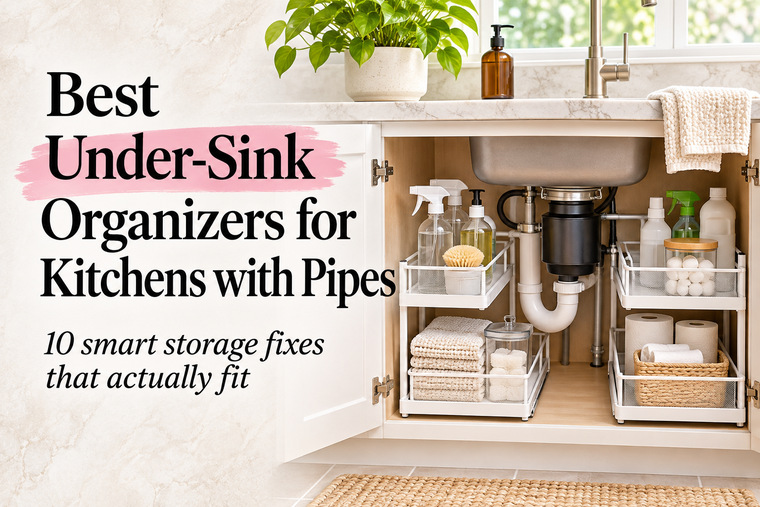
The space under your kitchen sink has a special talent: turning one bottle of dish soap into a landscape of mystery containers, crumpled bags and a sponge you absolutely do not remember buying. And unlike a pantry shelf, this cabinet comes with permanent roommates: drainpipes, water lines and possibly a garbage disposal that seems to occupy its own zip code.
The best under-sink organizers for kitchens with pipes work with those obstacles rather than pretending they do not exist. That means choosing the right shape, measuring the cabinet opening as well as the interior, and buying fewer storage pieces than a typical before-and-after video might suggest. The result can be easier to clean, easier to maintain and genuinely useful on a rushed Tuesday.
This guide compares ten specific products that solve different problems, from L-shaped sliding shelves to waterproof liners and leak alerts. These are research-based recommendations, not claims that we personally tested every item. Product configurations can change; always verify the exact dimensions and current offer before checkout.
Watch: organize a kitchen sink cabinet around pipes
This walkthrough from professional organizer Alejandra Costello shows ways to use vertical space and keep frequently used supplies accessible around under-sink plumbing.
How to Measure Under a Kitchen Sink Before Buying Organizers
First, empty the cabinet entirely. Yes, even the pile of grocery bags that appears to regenerate when nobody is looking. Wipe the base dry and check for softness, staining, active dripping or a musty smell. Storage equipment does not fix damaged wood or a leak. If you discover moisture, address that problem before the satisfying part with the matching baskets.
Take six measurements: interior width between the walls; usable depth from door frame to back; vertical clearance beneath the sink; width of the actual door opening; distance from each side wall to the nearest pipe; and the free space in front of the garbage disposal. A wide cabinet with a narrow face-frame opening can reject a drawer that technically fits inside. Cabinet hinges can be tiny but determined gatekeepers.
Next, measure your tallest everyday bottle, including its spray trigger. For sliding shelves, account for the height of the product and the path it travels as the drawer opens. Imagine a cardboard box representing the organizer: can that entire box pass through the doorway without hitting a pipe, hinge, disposal or a high bottle? This low-tech test prevents high-tech regret.

Write down both the manufacturer’s overall dimensions and any specific minimum door-opening requirement. For adjustable products, check their minimum and maximum widths, not just the larger headline number. If a listing leaves out a crucial measurement, choose an alternative with better specifications rather than guessing and hoping for an unusually cooperative P-trap.
Which Under-Sink Organizer Shape Actually Fits Your Plumbing?
Think about the cabinet in three zones: the left side, the center plumbing zone and the right side. Most cabinets cannot use the center as a full-height rectangular storage tower. Instead of trying to defeat the plumbing, choose a product whose empty space lines up with what is already installed. The plumbing stays accessible for maintenance, and your organizer stops being an expensive obstacle.
L-shaped shelves put a narrower shelf above a wider lower basket, creating extra clearance on one side. They are useful beside offset disposals and traps. But “L-shaped” is not a magic compatibility spell: the open side has to face the correct direction and the base still needs floor space. The top shelf must not interfere with flexible hoses, shutoff valves or the dishwasher line.
Expandable shelves with removable panels are often better when pipes run through the middle. You can leave a panel out around an obstruction instead of trying to fit a drawer behind it. The compromise is access: fixed shelves can require a little more reaching than a sliding basket, so reserve the rear for backups rather than daily essentials.
Pick 1: A pipe-friendly L-shaped pull-out organizer
If your sink has a disposal on one side and a clear lane beside it, this is the most natural organizer style to consider first. Set it into the cabinet before securing any anti-slip features, pull the lower drawer all the way forward and confirm the pipe connections are still reachable. Heavy items should stay low and centered so the organizer does not become tippy when you pull it open.

REALINN L-Shaped 2-Tier Pull-Out Under-Sink Organizer, Black, 2-Pack
An L-shaped metal frame allows the upper tier to sit beside plumbing rather than collide with it. A lower slide-out basket helps you reach the back. Check which side of your particular cabinet has usable clearance.
CPC may earn an affiliate commission from your purchase, thank you.
As an Amazon Associate I earn from qualifying purchases. Catching Print Co. may earn a commission when you buy through our qualifying Amazon links, at no additional cost to you. Amazon ASIN product identities were cross-checked against their listings on October 31, 2026; verify the selected size, variant and current offer before ordering.
Pick 2: An adjustable-width shelf for centered pipes
An expandable rack makes sense for a cabinet where the upper area is broken up by pipes but the lower floor is comparatively open. Arrange the removable panels around the trap, then place infrequently used supplies on the back row. If you need to remove the rack every time a plumber visits, leave a little extra space rather than fitting it so tightly that it becomes part of the building.

SimpleHouseware 2-Tier Expandable Under-Sink Shelf Organizer, Silver
An adjustable-width shelf with movable panels can create storage around central drainpipes. It is a useful alternative to a pull-out drawer when the cabinet opening is wide but plumbing interrupts the middle.
CPC may earn an affiliate commission from your purchase, thank you.
10 Useful Under-Sink Storage Products, Matched to Real Cabinet Problems
The ten picks here are not ten versions of the same black metal basket. We are matching a product to a specific obstacle: water, awkward cabinet depth, small items, narrow side lanes and the classic problem of never being able to find a spare sponge. In some homes, one organizer and a simple tray are all you need. Buying every item on this page would be the opposite of organizing.
We also avoid pretending that an under-sink cabinet is a tiny showroom. Bottles drip, cabinet floors get dusty and seasonal plumbing maintenance happens. Choose surfaces that are easy to wipe down, keep valves visible and plan for future access. The most successful setup is the one you can keep orderly without giving yourself a weekend project every three weeks.
Pick 3: A waterproof liner before the baskets go in
The cabinet floor is the most neglected surface in a kitchen, right up until something spills. A fitted mat with raised edges can make routine drips easier to notice and clean. It is not a substitute for fixing a leak, and a liner should never conceal ongoing water damage. Do your sizing before buying: a 34-by-22-inch mat will not magically fold itself into the shape of every 24-inch sink base.


SIKADEER Waterproof Under-Sink Mat, 34 × 22 Inches
A raised-edge silicone cabinet mat can help contain small spills beneath the organizers. The 34-by-22-inch version is not universal—measure your cabinet floor before choosing this specific variant.
CPC may earn an affiliate commission from your purchase, thank you.
Pick 4: Metal sliding drawers for a deep side compartment
If your cabinet has one open strip along the left or right wall, sliding baskets let you bring supplies forward without kneeling on the floor. Metal is often a practical material for heavier everyday bottles, but check the product’s own stated load limits and assembly requirements. A pair of organizers is only a bargain if both will be used; measure the second location before celebrating the two-pack.

Kitstorack 2-Tier Metal Pull-Out Under-Sink Organizers, Black, 2-Pack
Two metal sliding organizers suit cabinets with unobstructed side lanes. Unlike an L-shaped shelf, each unit needs enough vertical and horizontal clearance for its full rectangular frame.
CPC may earn an affiliate commission from your purchase, thank you.
Pick 5: Clear pull-out drawers for the little stuff
Small kitchen items have a remarkable ability to vanish into a dark corner. Clear drawers can group spare sponges, brushes, rubber gloves, dishwasher tablets in their original packaging and other lightweight supplies. Their strength is visibility. Their weakness is that they can tempt you to store every almost-empty sample bottle you’ve ever owned. Sort before you buy drawers, not after.

Vtopmart 4-Pack Pull-Out Under-Sink Organizers, S-Standard
Four transparent pull-out drawers help separate sponges, dishwasher accessories and light cleaning supplies. Measure drawer opening clearance and avoid using small plastic drawers for heavy chemical jugs.
CPC may earn an affiliate commission from your purchase, thank you.

How to Organize a Small or Awkward Cabinet Without Overspending
A budget-friendly system begins with reducing inventory. Keep the current dish soap, a few frequently used cleaning tools and reasonable backups. Return extra rolls of bags or paper products to another dry storage area if the sink cabinet is crowded. If a large container is already half empty, use it up before buying more. Even the prettiest organizer cannot make forty unrelated items fit into a cabinet built for twelve.
Choose your first purchase around the main frustration. Can’t reach supplies? Try a sliding unit. Can’t fit shelves because of a pipe? Try an adjustable one. Have little things everywhere? A shallow drawer may be more useful than another tall rack. A three-piece kit is appealing, but count the available landing spots in your home before choosing the bundle. The bundle should solve three problems, not manufacture three new ones.
Pick 6: A multi-pack for several small storage zones
A three-pack can be sensible when you have several narrow usable areas, especially in a kitchen paired with a laundry closet. It is less sensible when the disposal occupies half your cabinet and the only free lane is seven inches wide. In that case, compare the footprint of each organizer instead of the total number in the box. The best value is the number of units that actually fit.

Sevenblue 3-Pack 2-Tier Under-Sink Organizers with Sliding Drawers
A three-unit set works when one kitchen cabinet has several short usable sections, or when the extras can serve a pantry or utility closet. Double-check the listed basket footprint and drawer travel.
CPC may earn an affiliate commission from your purchase, thank you.
Use the Cabinet Door and Vertical Space Carefully
Some of the best storage exists away from the cabinet floor. A lightweight handled brush, dustpan or specialty cleaning tool can live on a properly mounted gripper when there is room for it. But under-sink doors swing inward, hinges occupy space and a hanging tool can collide with a drawer. Before mounting anything, tape a paper outline to the door and close it gently to make sure you are not designing a perfectly organized door that refuses to shut.
Adhesive attachments require suitable surfaces, proper cleaning and curing according to their instructions. Humid, damaged or textured cabinet interiors may not hold reliably. Never hang heavy bottles from a makeshift adhesive hook. Keep any under-sink storage removable enough that a person can reach supply shutoff valves quickly in an emergency. Function should win over an immaculate social-media photograph.
Pick 7: A tool gripper instead of another floor bin
Adhesive broom grippers make more sense for a lightweight handled tool than for an entire cleaning arsenal. A short cabinet door may still be too small. Check the thickness of the handle, surface restrictions and stated weight limit; the last thing you want is a broom handle taking an unscheduled midnight dive into the disposal.

Command Broom and Mop Gripper, 3-Pack
Adhesive grippers can lift a slim brush or lightweight handled tool from the cabinet floor when compatible mounting surfaces and clearance are available. Follow the package weight and adhesive instructions.
CPC may earn an affiliate commission from your purchase, thank you.
The Case for a Movable Caddy Instead of Fixed Shelves
There is a wonderfully unglamorous option that solves more problems than expected: put regularly used items in one portable caddy. You take it out, use what you need, and put it back. A wheeled model can work well in a deep cabinet with a level surface and a clear rolling path. It can also make cleaning the cabinet floor easier because you can move the whole group without dismantling your setup.
The catch is clearance. A rolling caddy must clear the door lip and any face frame, and the handle cannot snag the plumbing. If your floor has a tall raised edge or a cabinet divider, a lift-out caddy is more reliable. For a renter, a simple movable system is frequently better than drilling into cabinets you do not own. For a homeowner who prefers permanent installations, consider service access before adding mounting hardware.
Pick 8: A roll-out two-tier caddy
This type of caddy is especially useful for light, frequently grabbed items. Put your everyday cloths and brush on the top tier, with smaller refill items below. Don’t use the caddy as a reason to carry hazardous chemicals through the house uncovered, and never allow children to access a cleaning-products cabinet without appropriate protections.

Joseph Joseph CupboardStore 2-Tier Wheeled Storage Caddy
A two-tier wheeled caddy keeps grab-and-go supplies together without requiring a mounted track. It needs a clear path through the door opening and a level floor to roll smoothly.
CPC may earn an affiliate commission from your purchase, thank you.

Protect the Cabinet from Water—and Know When to Call for Help
A tiny leak can turn a beautifully organized cabinet into a very expensive science experiment. Check around the P-trap, supply line connections and disposal periodically, especially after major cleaning or plumbing work. If you spot active dripping, swelling, wetness that returns or an unfamiliar odor, do not put more bins over it and hope the situation improves. Dry the area safely and investigate the cause or call the appropriate professional.
A leak sensor adds awareness, not prevention. Place a sensor where water would likely collect rather than balancing it on top of a bottle. Connected products may require a particular hub, network or app setup; read the exact listing before purchasing. Test the alert mechanism as directed and keep the batteries maintained. A sensor can be reassuring, but a regular cabinet inspection still matters.
Pick 9: Leak alerts for kitchens and other wet areas
A three-sensor kit can cover a kitchen sink plus other likely drip points, but it is worth choosing only if you will actually set up and maintain its alert system. If the cabinet is in a location with unreliable connectivity, check what audible alerts function independently. The device should augment basic maintenance, not replace it.

GoveeLife Smart Water Leak Detector 1s, 3-Pack
Water sensors can provide audible and connected alerts when placed at likely drip points. This three-pack is designed around a smart alert system; check wireless hub requirements and battery specifications before ordering.
CPC may earn an affiliate commission from your purchase, thank you.
Give Small Supplies Their Own Compartments
Even a well-fitted L-shaped organizer becomes annoying when everything is mixed together. Divided drawers can separate the tiny items that would otherwise collect at the bottom of a storage basket. Try a category for sponges, one for reusable cloths and one for unopened small supplies. Keep the categories broad enough to maintain—if your label system needs a spreadsheet, the storage system is managing you.
Choose plastic storage appropriate for the intended items and cabinet conditions. Clear dividers work best for light supplies, while large liquids may need a tray with better containment. Avoid transferring cleaning chemicals into decorative jars. Labels on original packaging provide important hazard and use information. If an item leaks, its original container and the instructions for safe cleanup are far more useful than a matching acrylic bottle.
Pick 10: Modular drawers with movable dividers
A set of divider drawers can make sense once the main plumbing obstacles are accounted for. They are not the first purchase for an awkward sink cabinet because a perfectly organized little drawer is still useless if it cannot fit through the opening. Measure twice, add one small-item zone, and stop before the cabinet begins resembling a miniature office-supply store.

Delamu 2-Tier Stackable Pull-Out Organizers with Dividers, White, 2-Pack
Divider-equipped drawers help organize small, lightweight accessories within a cabinet zone that has sufficient open height. The modular format is for sorting, not for spanning a disposal or supporting heavy bottles.
CPC may earn an affiliate commission from your purchase, thank you.
A Practical 30-Minute Under-Sink Organization Plan
Minutes 0–5: Remove and inspect. Take everything out, check for moisture, wipe accessible surfaces and photograph the plumbing layout for reference. Recycle or dispose of empty packaging appropriately, and follow local instructions for unwanted household chemicals. Never pour chemicals down a drain merely to clear space.
Minutes 5–10: Sort into three groups. First are safe, frequently needed items; second are occasional items and backups; third are products that should be stored elsewhere, such as food, medicines and hazardous cleaning chemicals that need locked or elevated storage. If children may access the area, follow the U.S. Consumer Product Safety Commission’s cleaner-storage guidance: keep cleaning products locked up and out of children’s reach.
Minutes 10–20: Build around access. Place your single largest storage unit in the clear side lane, confirm you can open it fully, then add a small tray or caddy only where the remaining floor space allows. Do not block shutoff valves or strain a supply line. A useful cabinet should remain accessible for repairs, inspections and quick cleanup.
Minutes 20–30: Put things back by frequency. Keep frequently used safe items in front, backups behind, and small supplies in one compartment. Close the door and reopen everything a few times. If a handle clips a hinge or the cabinet door pushes the bins inward, adjust now. Congratulations: you have successfully organized a cabinet without buying an entire influencer’s shopping cart.

Five Under-Sink Organization Mistakes to Avoid
1. Buying by appearance instead of dimensions. A product photographed in a huge, uncluttered cabinet may not fit yours. The critical numbers are usable side clearance, minimum opening width and drawer travel. 2. Blocking plumbing access. Never trap valves or slip a drawer track against a flexible supply hose. Storage should be movable in a routine inspection or emergency.
3. Ignoring liquid spills. A waterproof tray is helpful, but it should be checked and dried; water trapped below a liner can still cause damage. 4. Storing hazardous chemicals in an unlocked low cabinet. Follow package labeling and store harmful products in locked or out-of-reach locations, particularly in households with children or visiting children.
5. Treating a multi-pack as automatic value. Purchase enough organizers for the spaces you truly have. Leftover bins are not savings if they migrate to a hallway closet and become another source of clutter. For more organization projects, see our deep pantry shelf guide and small laundry room storage ideas.
FAQs: Under-Sink Organizers for Kitchens with Garbage Disposals
What is the best organizer for under a kitchen sink with a garbage disposal?
Start with an L-shaped sliding shelf if its open area aligns with the disposal and the lower basket clears the cabinet opening. If your plumbing occupies the exact center, an adjustable shelf with removable panels may fit better. There is no universal product that fits every disposal configuration, and a narrow standalone basket can be the better answer when the cabinet is unusually crowded.
How much space do I need for a pull-out under-sink organizer?
You need enough interior width, depth and height for the unit, plus a door opening wide enough to pass the drawer and enough room for the drawer to extend. Measure the path of movement, not only the parked footprint. Check product-specific minimum opening and track-clearance specifications because designs differ.
Can renters install under-sink pull-out organizers without drilling?
Many freestanding, removable and adhesive-mounted products do not require drilling. However, adhesives may affect finishes, and some sliding systems require screws. Read the listing and your rental agreement. A freestanding shelf or lift-out caddy is typically easier to reverse than a permanent rail system.
Should cleaning chemicals be stored under the kitchen sink?
Potentially harmful products should be kept in locked or elevated storage out of reach of children. The Texas Poison Center Network recommends moving items such as drain cleaners away from under-sink areas. Keep all chemicals in original labeled containers, never mix different cleaners, and separate them from food.
Do I need a waterproof cabinet mat if I already have organizers?
A correctly sized mat may help collect small incidental drips or spills, making cleanup easier. It cannot repair a leak, protect an already damaged cabinet or replace routine checking. Choose a size and edge design that allow you to see and remove accumulated water rather than hiding it.
What should I buy first if I only have a small budget?
Buy only the item addressing the biggest current problem. For most awkward cabinets, that is either a well-fitting organizer, a protective mat if minor spills are common, or a simple caddy for everyday supplies. Removing unused items and placing hazardous products in safe storage costs little and often frees more space than another shelf.
The Best Under-Sink Organizer Is the One You Can Still Use Next Month
An under-sink cabinet does not need matching jars or a dramatic makeover to function better. It needs open plumbing access, a sensible amount of stuff and storage that actually fits. Start with your measurements, choose one solution for the biggest obstacle, and make sure the system still works when you are in a hurry. Your future self should be able to find the sponge without crawling halfway into the cabinet.
Ready to shop? Return to the 10 problem-matched picks, check each selected product’s Amazon page for current details and availability, and buy only what fits your measurements. The goal is a calmer kitchen—not a new collection of containers that need their own storage plan.
Research and safety references: The Kitchn, under-sink organizer comparisons; U.S. CPSC cleaner storage safety; Texas Poison Center Network; Amazon Associates commission schedule. Amazon ASIN product identities were cross-checked against their listings on October 31, 2026; verify current product details and availability before ordering.







Leave a Reply